
You might be looking at your skin in the mirror and thinking, “I’m doing all the right things, so why does it still look tired, uneven, or broken out?” Maybe someone at a med spa mentioned LED light treatments or micro needling treatments in Buffalo Grove, or you scrolled past a glowing before and after photo and thought, “Is this actually real, or just another promise that will disappoint me?”end
That uncertainty is very normal. Many people walk into a medical spa hoping for gentle but real results, and instead find a blur of devices, colors, and claims that are hard to sort out. You want something that helps, not another thing that drains your time and money with little to show for it.
Here is the short version. LED light therapy can help with mild to moderate acne, some redness and inflammation, and small improvements in texture and fine lines. It can support the skin’s healing process. It does not replace strong treatments like lasers, injectables, or surgery, and it will not give dramatic lifting or erase deep wrinkles. The details matter, and that is where people often feel misled.
So, where does that leave you when you are deciding whether LED at a medical spa is worth it for your skin and your budget?
What LED light therapy actually does to your skin at a med spa
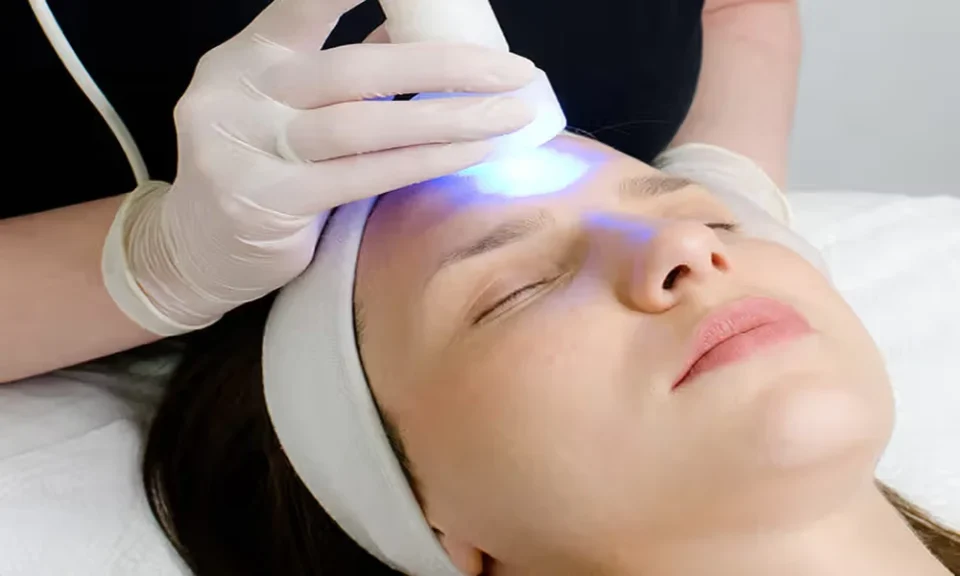
LED light therapy in a med spa setting uses specific wavelengths of light, usually red, blue, or near infrared, to target different skin concerns. It is noninvasive, which means nothing is cutting or burning the skin. You just lie under a panel of lights or wear a mask and feel a gentle warmth or nothing at all.
Red light is typically used for calming inflammation and supporting collagen. Dermatologists and professional groups describe it as one of several noninvasive options that can help with skin rejuvenation and healing when used correctly. You can read more about how red light therapy is viewed by dermatology experts to get a sense of its realistic strengths and limits.
Blue light is used more for acne. It targets the bacteria that contribute to breakouts. The American Academy of Dermatology lists light and laser treatments as one option among many for acne, especially when creams and pills are not enough. Their overview on laser and light treatments for acne explains that these therapies can help some people, but usually as part of a larger plan, not as the only tool.
The problem is not that LED does nothing. The problem is that it often gets framed as a cure-all, when in reality it is more of a supportive therapy. So results tend to be subtle, and they build slowly over a series of sessions, which can feel frustrating if you expected a single “wow” moment.
Where LED light therapy helps, and where it falls short
Think about a few common situations. You might see yourself in one of them.
Imagine you have mild adult acne, plus some redness and sensitivity. You are tired of harsh products, and the idea of a gentle light treatment feels comforting. In this case, LED light at a medical spa can be a good support. Blue light can help reduce acne-causing bacteria. Red light can calm some inflammation and help the skin feel less angry. You may still need a good skincare routine and possibly medication from a dermatologist, but LED can be a helpful add-on.
Now picture deeper wrinkles, sagging skin around the jawline, and sun damage that has built up over years. Here, LED is limited. It can slightly improve texture and fine lines, and it may help the skin look a bit more “rested,” especially with consistent sessions. However, it will not tighten loose skin in the way that stronger devices, injectables, or surgery can. If you go in expecting a facelift effect from lights alone, you will walk out disappointed.
There is also the money and time question. Most med spas recommend a series of LED sessions, often weekly at first, then maintenance. If each visit is not cheap, this adds up. Because of this tension, you might wonder if an at-home device is “good enough” or if the professional version is truly different.
Another layer of confusion comes from mixing LED with other treatments. You might be offered LED after microneedling, peels, or body contouring. In many cases, the LED is meant to support healing and reduce redness, which can be helpful, but it is easy to assume that the LED is what is giving all the results, when in fact the primary treatment is doing most of the work.
Regulation adds another wrinkle. The FDA clears many aesthetic devices for specific uses, but that does not mean every claim you hear in a spa lobby is backed by the same level of proof. If you are curious how noninvasive technologies are generally viewed from a safety and regulation standpoint, the FDA’s information on noninvasive aesthetic devices can give you a sense of how cautious you should be about broad promises.
LED at the med spa vs at-home devices vs stronger treatments
So how do you sort through all of this and decide what makes sense for you right now?
The table below compares three common options. It is not meant to push you in one direction. It is meant to give you a clearer view so you can weigh what matters most to you.
| Option | Typical Use | What It Helps Most | Where It Falls Short | Cost & Commitment |
|---|---|---|---|---|
| LED light therapy at a med spa | Professional panels or masks, often weekly sessions | Mild to moderate acne, redness, mild texture and fine lines, post-treatment calming | Does not lift sagging skin, does not erase deep wrinkles or heavy sun damage, results are gradual | Medium to high cost over time, requires frequent visits and consistency |
| At-home LED devices | Handhelds or masks used several times a week at home | Maintenance for mild concerns, supporting professional treatments, convenience | Often weaker than spa devices, results may be very subtle, quality varies by brand | Upfront device cost, low ongoing cost, demands self-discipline to use regularly |
| Stronger in-office treatments | Lasers, microneedling with radiofrequency, peels, injectables | More dramatic improvement in wrinkles, scars, sun damage, sagging | More downtime, higher risk of side effects, may not be suitable for every skin type or health status | Higher per-session price, fewer sessions needed for visible change |
Seeing it this way, LED light therapy sits in a middle space. It is gentler than many procedures, which is good for comfort and safety, but that same gentleness means the results are naturally more modest.
Three concrete steps before you commit to LED treatments
1. Get specific about your main skin goal
Before you book anything, write down your top one or two goals. For example, “reduce breakouts,” “calm redness,” or “soften fine lines around my eyes.” Then ask the provider directly how LED fits those goals and what it cannot do. If they promise that LED light therapy at medical spas will fix everything from deep wrinkles to significant sagging, that is a red flag. Clear, honest expectations are your best protection from regret.
2. Ask about the full plan, not just the device
Good med spa care is rarely one device in isolation. Ask questions like, “How many sessions do you recommend, and how often?” and “What skincare should I use at home to support this?” and “Is there a reason to combine LED with other treatments, and what does each one actually do?” A thoughtful provider will explain how LED fits into a larger plan instead of pushing a package without context.
3. Compare cost, time, and comfort with other options
Take a step back and compare LED to other routes. For example, if your main concern is acne, would a prescription routine plus occasional med spa visits give you more value than a long LED package alone. If your priority is aging changes, would a single stronger treatment with clear downtime serve you better than many gentle sessions with subtle change. There is no single right answer, only what fits your needs, schedule, comfort level, and budget.
Moving forward without pressure or confusion
You do not need to become an expert in light wavelengths to make a sound choice. You only need a clear sense of what LED can realistically offer, what it cannot, and how that lines up with what you want for your skin and your life right now.
Used with honesty and care, LED light therapy can be a calming, supportive tool for acne, redness, and mild signs of aging. Used as a catch-all promise for dramatic change, it becomes one more source of disappointment. You deserve the first, not the second.
As you consider your next step, take your time, ask questions, and give yourself permission to walk away from anything that feels rushed or exaggerated. Your skin story is personal, and the choices you make around it should feel informed, steady, and truly yours.
