
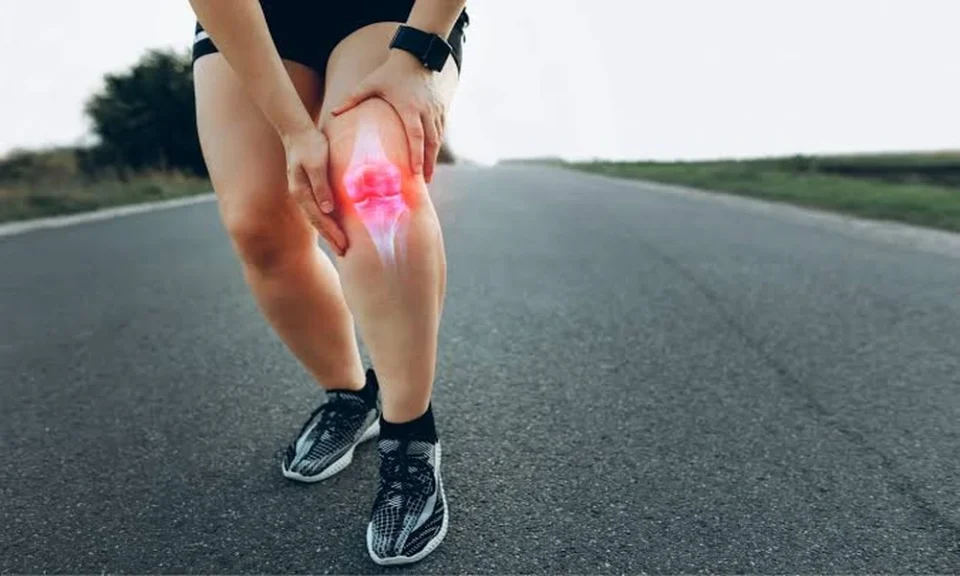
Runner’s knee is a dull, aching pain around or behind the kneecap. Despite the name, it does not only affect runners. Cyclists, hikers, footballers and people who spend a lot of time squatting or climbing stairs can develop it too. The condition is very common, and with the right care, most people recover well and get back to training.
What Is Runner’s Knee?
The medical term is patellofemoral pain syndrome. It describes pain where the kneecap meets the thighbone. Normally the kneecap glides smoothly in a groove at the end of the thighbone. When it is put under too much stress or does not track properly, the surrounding tissue becomes irritated.
Common Symptoms
- Dull pain around or behind the kneecap.
- Pain that worsens when running downhill, using stairs, squatting or kneeling.
- Discomfort after sitting for a long time with bent knees.
- A grinding or clicking feeling in the knee.
What Causes It?
Overuse. Repeated bending and impact, especially when training volume rises quickly, can overload the joint.
Muscle weakness. Weak quadriceps, hips and glutes can let the knee collapse inward, changing how the kneecap tracks.
Tight muscles. Tight hamstrings, calves and the iliotibial band can increase pressure on the kneecap.
Foot mechanics. Flat feet or excessive inward rolling of the foot can affect alignment all the way up the leg.
Training errors. Sudden jumps in distance, too many hills or running on hard surfaces all add stress.
Footwear. Worn-out or unsuitable shoes provide less support and shock absorption.
Care and Treatment
Reduce the load. Cut back on the activities that cause pain. Swimming and gentle cycling with a raised seat may be easier on the knee.
Ice after activity. Apply ice for 15 to 20 minutes to ease pain and irritation.
Strengthen. This is the most important part of recovery. Clamshells, side-lying leg raises, glute bridges, wall sits and step-downs build support around the knee and hip.
Stretch. Regular stretches for the quads, hamstrings, calves and hips help reduce strain on the joint.
Care for soft tissue. Foam rolling the thighs and calves, along with a 출장안마 session focused on the legs and hips, can ease the muscle tightness that contributes to knee pain.
Check your shoes. Make sure your footwear suits your foot type and has not passed its useful life.
Prevention
- Increase running distance by no more than about 10 percent per week.
- Warm up before every session and cool down afterward.
- Include strength training for the hips and legs at least twice a week.
- Mix up running surfaces and include rest days.
- Pay attention to early signs of pain rather than pushing through.
When to See a Professional
Visit a doctor or physiotherapist if pain lasts more than a few weeks, the knee swells, gives way or locks, or pain occurs at rest or at night. A professional can assess your movement and design a targeted rehab programme.
With patience, smart training and consistent strength work, runner’s knee usually settles, and most people return to the activities they love.
