
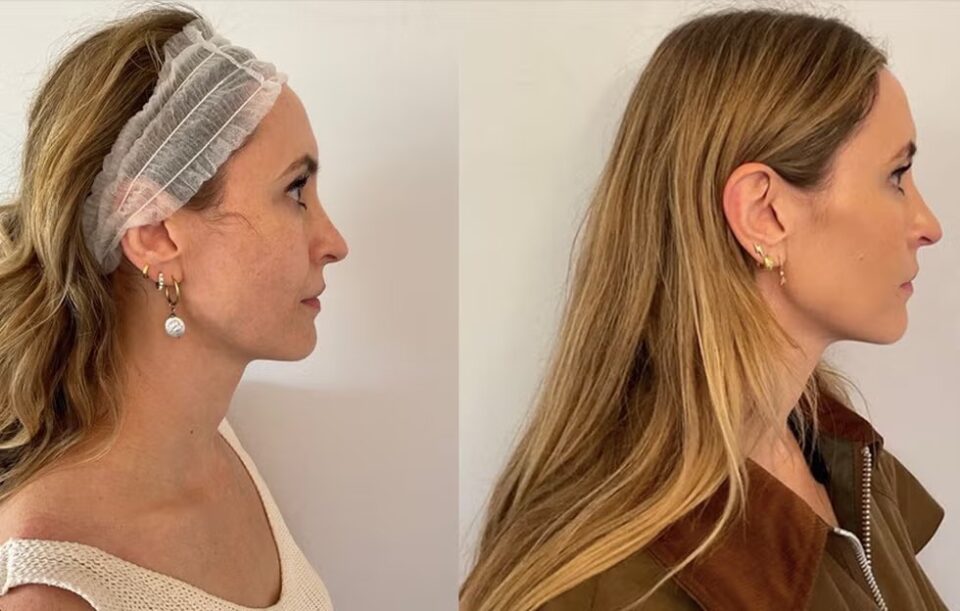
Sofwave is a noninvasive focused ultrasound treatment that heats your mid-dermis (about 1.5 mm deep) to trigger a wound-healing response and remodel collagen types I/III and elastin. Built-in cooling protects your epidermis, so you’ll usually feel brief deep warmth and intermittent prickling, with minimal downtime. You can expect subtle tightening and smoothing—not major lifting—with early change in 4–6 weeks and continued improvement through 3–6 months, plus maintenance about once a year. Next, you’ll see how it compares and who benefits most.
What Is Sofwave Skin Tightening?
Sofwave skin tightening is a noninvasive treatment that uses focused ultrasound energy to heat the mid-dermis (about 1.5 mm deep), where collagen and elastin support firmness. You get controlled thermal injury zones that trigger a wound-healing cascade, encouraging new collagen over weeks to months without disrupting the epidermis. Built-in cooling helps protect the surface and improve comfort, so you can typically resume normal activity immediately. You’ll see it positioned as a technology-forward alternative to more invasive tightening, with outcomes depending on baseline laxity and biologic response. Your clinician should assess medical history, skin quality, and expectations, then document photos for objective tracking. During consults, two-word discussion ideas and unrelated topics can clarify goals.
What Sofwave Treats (And Best Areas)
You can use Sofwave to improve mild to moderate skin laxity and fine lines by stimulating collagen in targeted areas. You’ll typically see the best response on the brow and forehead, cheeks and jawline, under the chin and neck, and on select body zones like the upper arms, abdomen, and knees. Next, you’ll learn which concerns it reliably improves—and where results are usually more limited—so you can match the treatment to your goals.
Best Treatment Areas
Where does this ultrasound-based tightening actually work best? You’ll see the most consistent outcomes on the mid-to-lower face and neck, where dermal collagen remodeling can translate into visible support without incisions. Treat the jawline, submental area, cheeks, and brows for a refreshed, lifted look with minimal downtime. The neck often responds well because Sofwave targets the mid-dermis while protecting the epidermis with integrated cooling—central to sofwave safety. You can also treat the perioral area and upper lip lines selectively, provided your clinician uses appropriate energy settings. Strong patient selection matters: you’ll benefit most if you have mild to moderate laxity and stable skin health, rather than advanced laxity that typically requires surgical lifting.
Concerns Sofwave Improves
Because it delivers controlled ultrasound heat to the mid-dermis, this treatment most reliably improves mild-to-moderate skin laxity and early textural aging rather than deep volume loss. You’ll see the best response when your concern highlights include soft jawline blurring, early jowling, crepey neck skin, and mild lower-face sagging. It can also refine fine lines and crinkling on the brows and around the mouth by stimulating neocollagenesis, supporting a smoother, tighter surface. If you’re evaluating reliability questions, focus on realistic endpoints: lifting measured in millimeters, improved firmness, and gradual change over 6–12 weeks. Sofwave won’t replace filler, fat transfer, or surgery for pronounced folds or heavy laxity, but it can meaningfully extend your “in-between” phase.
How Sofwave Ultrasound Stimulates Collagen and Elastin
Sofwave uses focused ultrasound to raise temperature within the mid-dermis in a controlled, non-ablative way while keeping the skin surface protected. This targeted dermal heating triggers a wound-healing response that stimulates new collagen and elastin production and gradually remodels existing fibers. Over the following weeks to months, you’ll see firmer, smoother skin as this collagen-and-elastin remodeling progresses.
Ultrasound-Induced Dermal Heating
How does ultrasound tighten skin without surgery? Sofwave delivers synchronized ultrasound beams to a precise mid-dermal depth, where controlled thermal energy creates uniform heating. You get a targeted temperature rise that’s high enough to trigger a biological response, yet designed to spare the epidermis through integrated contact cooling.
This thermal effect is measured and time-limited: each pulse adheres to preset parameters, supporting ultrasound safety across skin types when used by trained clinicians. Your provider maps treatment zones and overlaps pulses to keep heating consistent rather than scattered. Treatment duration is typically around 30–45 minutes for the face and neck, depending on surface area. You may feel brief warmth or tingling, but the goal stays the same: predictable dermal heating without cutting, needles, or significant downtime.
Collagen And Elastin Remodeling
Trigger a controlled heat signal in the mid-dermis, and your skin shifts into repair mode. Sofwave’s parallel ultrasound beams create uniform thermal zones without injuring the epidermis, so you get stimulation rather than ablation. In response, fibroblasts upregulate heat-shock pathways and initiate collagen remodeling: damaged collagen fragments break down, and new type I and III collagen is laid down in tighter, better-aligned bundles.
You’ll also drive elastin remodeling. While adult elastin regenerates slowly, controlled dermal stress can improve elastic fiber organization and support proteins, thereby helping the skin recoil and regain texture over time. Clinically, this translates to gradual tightening and smoother, less crepey areas, typically starting at 4–6 weeks and continuing for 3–6 months. Results depend on baseline laxity, age, and metabolic health.
Does Sofwave Skin Tightening Hurt? Comfort Options
Wondering whether the treatment hurts? Most people describe Sofwave as brief, deep warmth with intermittent prickling as ultrasound energy is delivered in pulses. Discomfort varies by area and individual sensitivity, but it’s typically tolerable and short-lived because each pulse lasts seconds and the device integrates contact cooling. That built-in cooling helps protect the epidermis and reduces pain perception without sacrificing dermal heating. If you’re pain-sensitive, you can optimize comfort with topical anesthetic, oral analgesics, or targeted cooling pauses between passes. Your provider can also adjust energy settings and pulse spacing to balance efficacy and comfort. Ask about contraindications and a pain plan; subtopic not relevant, irrelevant discussion won’t guide outcomes.
Sofwave Downtime: Redness, Swelling, Aftercare
After Sofwave, what downtime should you realistically expect? Most people return to work the same day. You may notice mild to moderate redness and warmth for 30 minutes to a few hours; less commonly, swelling or tenderness lasts 24–72 hours. Rarely, you can develop temporary wheals or small bruises, especially if you’re prone to flushing or take blood-thinning supplements.
You’ll optimize recovery by using gentle cleanser, bland moisturizer, and broad-spectrum SPF 30+ immediately. Skip exfoliants, retinoids, and acids for 3–5 days, and avoid intense heat (sauna, hot yoga) for 24–48 hours. If swelling appears, use cool compresses and sleep slightly elevated. Report persistent pain, blistering, or focal numbness—those aren’t an unrelated topic or irrelevant discussion.
Sofwave Results Timeline (And How Long They Last)
When will you actually see Sofwave results—and how long will they stick around? You may notice subtle firmness within 1–2 weeks as tissue edema settles, but your real change comes from neocollagenesis. Most patients see the most visible lift and smoothing around 6–12 weeks, with continued improvement up to 3–6 months as collagen and elastin remodel. Results typically last about 12 months, and many people maintain them longer with annual maintenance sessions, especially if they protect their skin from UV exposure and avoid significant weight fluctuations. Because this is non-skin-tightening, you won’t get surgical-level repositioning, but you can expect measurable texture and laxity gains. Procedure costs vary by the area treated and the number of sessions. Establish a clinical photo baseline to objectively track progress.
Sofwave vs Ultherapy vs RF Microneedling vs Lasers
How do you choose between Sofwave, Ultherapy, RF microneedling, and lasers for skin tightening? Start with energy depth and target. Sofwave uses synchronous ultrasound to heat the mid-dermis (approximately 1.5 mm) to promote collagen remodeling with typically minimal downtime. In sofwave vs Ultherapy, Ultherapy delivers focused ultrasound deeper (often 3.0–4.5 mm) for lifting vectors, but can feel more intense and may swell briefly.
RF microneedling creates controlled needle channels and dermal heating to improve texture and laxity; it’s more invasive and may require recovery time. In RF microneedling vs lasers, lasers excel for pigment, redness, and resurfacing; tightening varies by wavelength and depth, with a higher risk of post-inflammatory changes.
Who Is a Good Candidate for Sofwave Skin Tightening?
Energy depth and skin goals help narrow your options; the next step is matching Sofwave to your anatomy and expectations. You’re a strong candidate if you want noninvasive collagen stimulation for mild to moderate laxity on the jawline, cheeks, brows, neck, or submentum, without downtime. Candidate profiles often include patients who notice early “softening,” a fine, crepey texture, or subtle descent, but do not require surgical lifting.
Use Sofwave when you can commit to:
1. Realistic endpoints: tightening and smoothing, not fat reduction or major lifting.
2. Healthy skin biology: stable weight, controlled inflammation, and no active infection, wounds, or implanted electronic devices in the area.
3. Post-treatment maintenance: sun protection, consistent skincare, and periodic touch-ups as aging continues.
If laxity is severe, you’ll likely need a combination or surgery.
Conclusion
You choose Sofwave when you want a subtle lift without a big production. You’re warming the mid-dermis, nudging fibroblasts to rebuild collagen and elastin, not “changing” your face. With topical anesthetic or cooling, discomfort usually stays manageable, and redness or puffiness tends to fade quickly. You’ll see a gradual tighten‑and‑tone effect over weeks, often lasting months. Compare options honestly, and if laxity is mild to moderate, you’re likely well matched.
