
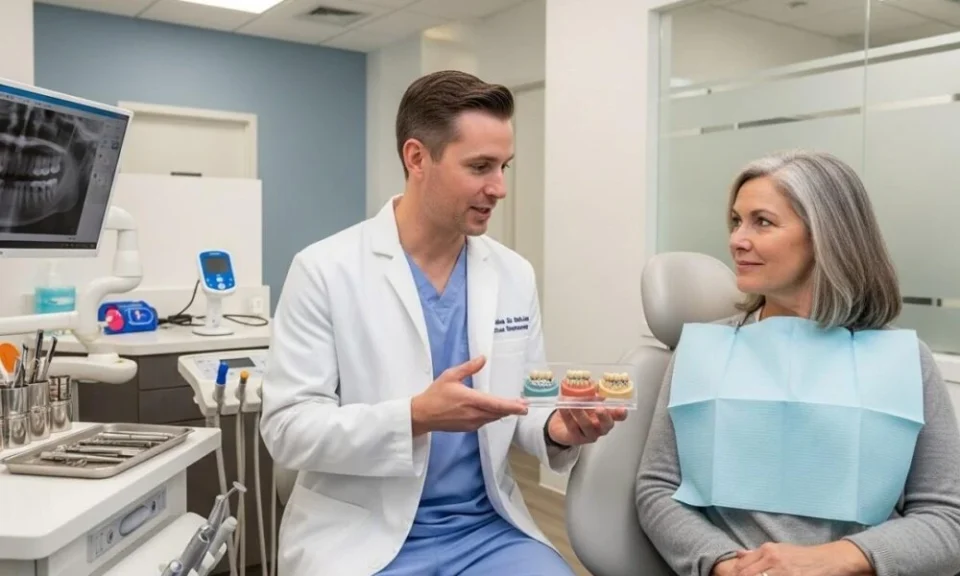
Smile correction opens with a full clinical examination covering teeth, gums, bite, and jaw function. Nothing is selected or recommended before this stage, which maps what the case structurally requires. The dentist records tooth positions, shade variation, shape irregularities, gum line symmetry, and bite patterns before any treatment discussion begins. he said that patient-reported concerns are documented separately from clinical findings because perceived priorities and structural priorities rarely match exactly. Photographs and radiographs capture both surface appearance and bone condition beneath. Shade mapping covers each anterior tooth individually rather than assigning one shade to the full arch. Gum tissue is checked for inflammation, recession, and margin unevenness, all of which affect the final result regardless of which procedure follows. Bite analysis runs through contact points and jaw movement before any surface restoration is considered for visible teeth.
Digital smile planning
- Dimension analysis
Planning software maps tooth dimensions against lip position, midline, and facial symmetry using photographs taken from multiple angles. Proposed changes overlay onto the patient’s existing smile so proportion and symmetry can be evaluated before any irreversible step begins, keeping adjustment costs at zero before preparation starts.
- Physical model fabrication
From the digital plan, a diagnostic wax-up creates a physical three-dimensional model. Patients can directly evaluate length, width, and overall proportion in their own mouth using a trial smile that sits temporarily over existing teeth.
- Pre-commitment review
Trial smile assessment gives both clinician and patient a shared reference point before preparation begins. Proportion adjustments identified at this stage are incorporated into the final plan without clinical consequence, whereas the same adjustments raised after preparation has started require additional appointments and material costs to correct.
Procedure sequencing
- Periodontal preparation – Treatment of gum disease and contouring of the gum tissue precede cosmetic procedures because veneers and crowns placed over inflamed tissue sit against an unstable margin.
- Orthodontic correction – Aligners are used first when teeth are spaced or rotated irregularly, since placing veneers during alignment requires full removal and replacement.
- Whitening sequence – Shade selection happens after whitening completes and before veneer fabrication begins, so colour decisions reflect the final baseline tooth shade accurately rather than the pre-treatment starting point.
- Surface restoration order – Veneers, crowns, and composite bonding complete the sequence after gum health is confirmed and tooth positions have held stable through the retention phase following orthodontic correction.
Restorations are seated and checked against the diagnostic wax-up under different lighting before permanent bonding proceeds. Shade match, margin fit, and surface texture each receive individual clinical attention at the seating appointment. Bite assessment runs again after restorations are seated to identify premature contacts during closure or lateral movement before bonding finalises chairside.
A review appointment within two weeks captures early wear patterns, sensitivity, or margin concerns before minor issues develop into larger clinical problems. Most post-placement concerns identified at two weeks resolve with simple intervention, whereas the same concerns identified later typically require more involved correction that earlier review would have prevented entirely.
