
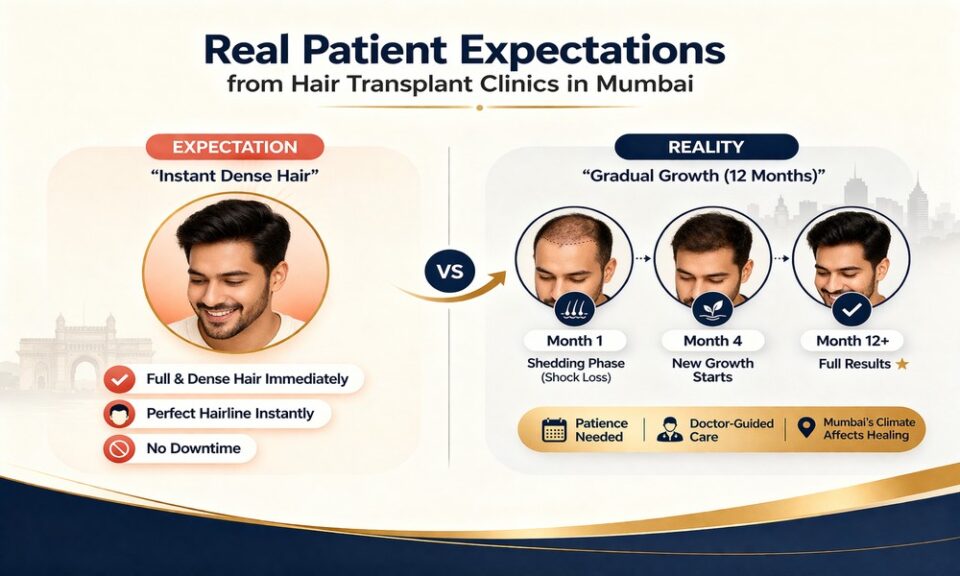
Many people considering a hair transplant in Mumbai walk into their first consultation with a mix of hope and uncertainty. They’ve seen before-and-after photos online, read a few forums, and maybe spoken to someone who went through the procedure. But what they often lack is a clear, grounded picture of what to realistically expect – from the process itself, to the recovery, to the final result. This gap between expectation and reality is one of the most common reasons patients feel disappointed, even when the procedure has gone well medically.
Understanding what a hair transplant actually involves – and what it cannot do – is the first step toward making a confident, informed decision.
What a Hair Transplant Actually Does
A hair transplant is a surgical procedure that moves hair follicles from one area of the scalp – typically the back or sides, where hair is genetically resistant to thinning – to areas where hair loss has occurred. The most commonly used technique today is FUE, or Follicular Unit Extraction, where individual follicles are removed one by one and implanted into tiny recipient sites on the thinning area.
The key thing to understand is that a transplant does not create new hair. It redistributes existing hair. This means the quality of your result depends heavily on the density and health of your donor area. Patients with limited donor hair may see more modest coverage than those with a strong supply of follicles.
Why the First Few Months Can Feel Discouraging
One of the most important – and least discussed – aspects of the hair transplant process is what happens in the weeks following the procedure. Most patients experience what is called shock loss, where the newly transplanted hair falls out within two to four weeks. This is completely normal and is part of the follicle’s adjustment to its new location.
The actual regrowth begins gradually, usually around three to four months post-procedure. Visible improvement is typically seen between six to nine months, with the final result often not fully apparent until twelve months or beyond. This timeline surprises many patients who expect faster changes.
Managing this waiting period – both physically and emotionally – is something patients benefit from knowing about before they begin.
Who Is a Good Candidate and Who May Not Be
Not everyone experiencing hair loss is a suitable candidate for a hair transplant. The procedure works best for individuals with:
- Stable hair loss (not actively progressing rapidly)
- Sufficient donor hair density
- Realistic expectations about coverage and density
- Good overall scalp and health condition
Those with diffuse thinning across the entire scalp, advanced hair loss with limited donor supply, or certain medical conditions affecting healing may need to explore alternative approaches first. A thorough evaluation before any procedure is essential, not optional.
What to Look for in a Mumbai Hair Transplant Clinic
Mumbai has a wide range of clinics offering hair transplant procedures, which makes choosing the right one both easier and more overwhelming. Beyond pricing, there are several things worth evaluating:
- Whether the clinic conducts a detailed scalp and follicle assessment before recommending treatment
- Whether the doctor explains limitations clearly, not just outcomes
- Whether the clinic discusses what happens if additional sessions are needed
- Whether post-operative care and follow-up are included in the plan
- Whether there is transparency around the surgeon’s experience with your hair type and loss pattern
Clinics like Kibo Clinics focus on evaluating the underlying cause of hair loss before recommending a treatment path, which helps ensure that the approach chosen is appropriate for the individual’s specific condition rather than a one-size-fits-all solution.
How to Prepare Yourself Before the Procedure
Going in prepared makes a significant difference. Before committing to a transplant, patients are advised to:
- Get blood tests done to rule out nutritional deficiencies or hormonal causes of hair loss
- Disclose all medications, as some can affect healing or hair growth
- Avoid smoking and alcohol for at least two weeks before the procedure
- Have a clear conversation with the doctor about expected graft count and realistic density
Preparation is not just physical. Understanding the emotional arc of the process – the initial shedding, the slow regrowth, the patience required – helps patients stay committed to the process without unnecessary anxiety.
Final Thoughts
A hair transplant can be a meaningful and effective option for the right candidate. But the outcome depends as much on informed expectations as it does on surgical skill. Patients who understand the timeline, accept the limitations, and choose a clinic that prioritises evaluation over sales tend to report far greater satisfaction – not because their results are necessarily different, but because they were ready for what the journey actually looks like.
Taking the time to ask the right questions before you begin is never wasted.
