
Key Takeaways
- Recovery exercises should only begin when pain levels are manageable and under appropriate guidance.
- Stretching can improve flexibility, while strengthening exercises help restore tendon function over time.
- Gradual progression is important to avoid aggravating the injured tendon.
- Good technique and consistency are often more beneficial than high-intensity exercise.
- Persistent symptoms may require assessment by a sports orthopaedic to determine whether additional golfers elbow treatment is needed.
Introduction
Recovering from medial epicondylitis, commonly known as golfer’s elbow, involves more than allowing the affected arm to rest. While reducing activities that aggravate the condition is important, controlled exercise also plays a role in restoring strength, flexibility, and function. Following golfers elbow treatment, a structured rehabilitation programme can help improve tendon capacity and reduce the likelihood of recurring symptoms. Depending on symptom severity, a sports orthopaedic in Singapore may recommend specific exercises as part of a broader recovery plan that also includes activity modification and other conservative management strategies.
Wrist Flexor Stretch
One of the first exercises introduced during recovery is a gentle wrist flexor stretch. The muscles involved in golfer’s elbow attach to the inner side of the elbow, and improving their flexibility may reduce unnecessary tension on the healing tendon. This stretch is typically performed by extending the affected arm with the palm facing upwards while using the opposite hand to gently pull the fingers downwards until a comfortable stretch is felt along the forearm. The movement should never produce sharp pain. Holding the stretch for several seconds and repeating it multiple times each day may gradually improve flexibility without placing excessive stress on the injured tissues.
Isometric Strengthening Exercises
When pain begins to settle, isometric exercises are often introduced before more dynamic strengthening movements. These exercises involve contracting the muscles without moving the joint, allowing the tendon to tolerate load while minimising irritation. For golfer’s elbow, an individual may press the palm against a fixed object while maintaining a steady contraction for several seconds. Isometric exercises are generally well tolerated during the early stages of rehabilitation and can help maintain muscle activity before progressing to more demanding exercises.
Progressive Wrist Strengthening
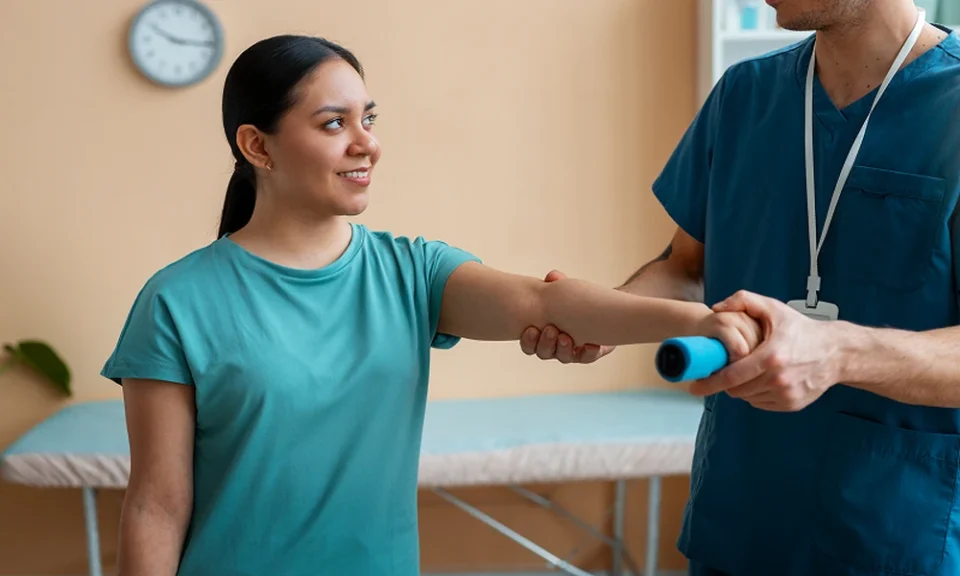
As recovery progresses, strengthening the wrist flexor muscles becomes increasingly important. Light resistance exercises using small dumbbells or resistance bands are commonly included in rehabilitation programmes. Wrist curls performed with controlled movements help rebuild muscle strength while encouraging gradual adaptation of the tendon. Resistance should remain light initially, with progression based on symptom response rather than a fixed timeline. Completing exercises with proper technique is more important than increasing weight too quickly, as excessive loading may delay recovery.
Forearm Rotation Exercises
The muscles responsible for rotating the forearm also contribute to elbow stability during daily activities and sporting movements. Controlled pronation and supination exercises using a lightweight object, such as a hammer or small dumbbell, help strengthen these muscle groups. Slow, deliberate movements allow the muscles to work without generating unnecessary strain on the recovering tendon. These exercises are commonly added once basic wrist strengthening is well tolerated and pain remains under control during and after activity.
Grip Strength Training
Reduced grip strength is a common complaint among individuals recovering from golfers elbow treatment. Gentle grip exercises using a soft therapy ball or hand exerciser can help rebuild strength while improving overall forearm function. The level of resistance should remain comfortable, particularly during the early stages of rehabilitation. Grip exercises should not increase pain around the inside of the elbow, and recovery programmes are typically adjusted if symptoms worsen following exercise sessions. As recovery progresses after golfers elbow treatment, grip exercises may gradually become more challenging to match improvements in strength and function.
Gradual Return to Functional Activities
Exercise programmes should eventually prepare individuals to return to their usual activities, whether these involve sports, manual work, or repetitive lifting. Functional exercises often mimic everyday movements while placing progressively greater demands on the forearm muscles and tendons. This gradual progression helps restore confidence in using the affected arm while reducing the likelihood of re-injury. Activity levels should increase steadily rather than returning immediately to full intensity, even when symptoms have improved.
Conclusion
Recovery following golfers elbow treatment depends on consistent rehabilitation, appropriate progression, and avoiding activities that overload the healing tendon too soon. Stretching, strengthening, grip training, and functional exercises each contribute to restoring elbow function when introduced at the appropriate stage of recovery. If symptoms persist despite rehabilitation or continue to interfere with daily activities, a sports orthopaedic can assess the condition, identify contributing factors, and recommend further management based on the individual’s recovery progress.
Partner with Dr Bryan Tan to recover from golfers elbow with a structured treatment plan.
